 Streetmodo
Best of Ancient Olympia: Temples, Training Grounds and the Olympic Stadium
Updated · Streetmodo
Ancient Olympia makes more sense when you think beyond the running track. Athletes needed training grounds; visitors needed accommodation; the sanctuary’s temples and dedications gave the gathering its religious purpose. These seven highlights connect those different parts of the site. Follow them at a comfortable pace, using the ruins’ shapes and their relationship to one another to picture a place that was much more than a sports venue.
Explore with the Ancient Olympia Audio Tour on the App Store.
The Gymnasium and Palaestra: before the competition
Begin with the training buildings on the western side of the site. The Gymnasium served athletic preparation, while the Palaestra’s courtyard and surrounding rooms bring the more enclosed training environment into focus. Their open spaces can initially look less impressive than the sanctuary’s temples, so give yourself a simple looking task: trace a courtyard edge, locate a line of columns and imagine people circulating between practice and rest.
This is a useful opening to the visit because it establishes the athletes’ daily world before the ceremonial landscape takes over. Olympia’s audio tour includes both stops.
Pheidias’ Workshop and the Leonidaion: making and hosting
The workshop associated with Pheidias connects a relatively modest building footprint with Olympia’s most celebrated lost artwork: the gold-and-ivory statue of Zeus. Later conversion into a Christian church adds another chapter to the same place. Look at the plan before moving on; the building’s story is easier to follow when you distinguish its different uses.
Nearby, the Leonidaion introduces accommodation and hospitality. Its broad outline is a reminder that a major sanctuary needed an infrastructure for visitors. These two stops reward attention to ordinary working spaces as well as famous monuments.
The Temple of Zeus: the scale of the sanctuary
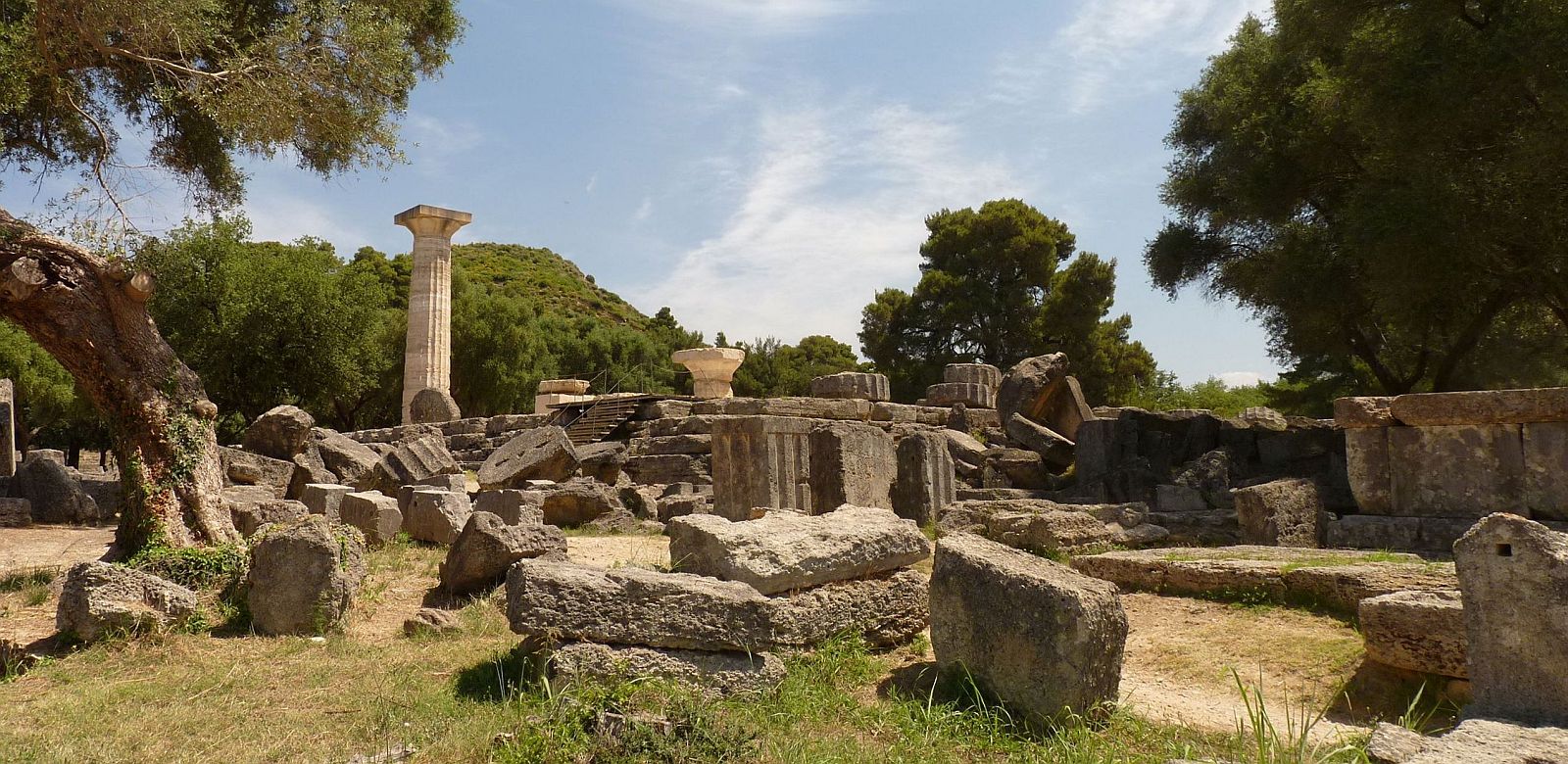
The Temple of Zeus is the best place to pause and recalibrate your sense of scale. Its fallen architectural pieces help communicate the mass of a building that can be difficult to reconstruct from a distant view. Look along the platform and compare the dimensions of the column drums with your own height, staying on the marked visitor route.
The cult statue is gone, so separate what survives from what you are imagining. The temple’s setting still explains its commanding place within Olympia. Save some energy for the museum, where sculpture can add detail to this broad architectural impression.
Hera’s Temple and the Pelopion: a second sacred focus
Do not let the larger Zeus temple eclipse the older Temple of Hera. Comparing the two is more revealing than treating each as another set of columns. Walk to an allowed viewpoint that makes the temple’s long rectangle clear, then locate the nearby Pelopion on the site plan.
The Pelopion was a sacred enclosure associated with Pelops, rather than another roofed temple. Looking at their spacing also helps you understand why a single straight route cannot tell the whole story.
The Philippeion: a circle among rectangles
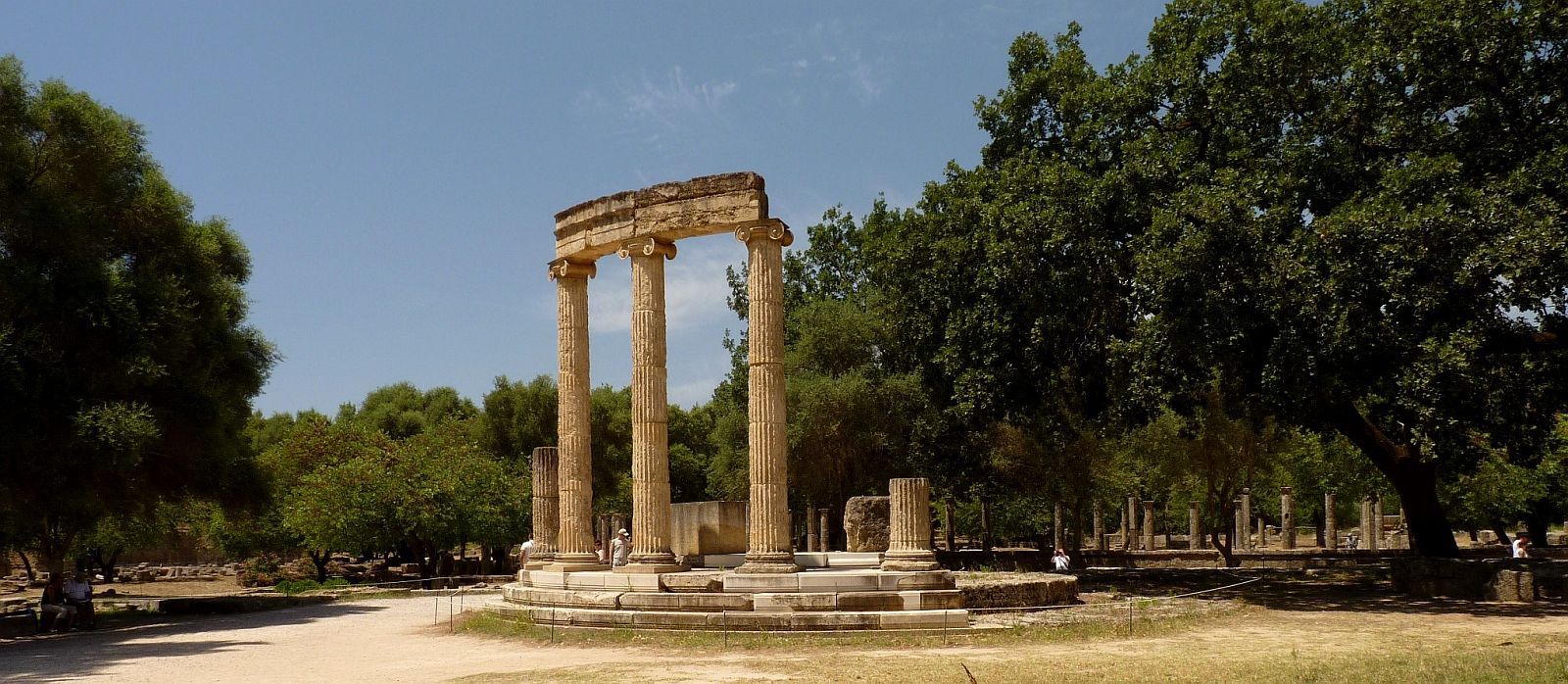
The Philippeion’s circular form makes it easy to recognize among Olympia’s predominantly rectangular buildings. Begun by Philip II of Macedon and completed under Alexander, it introduces royal commemoration into the sanctuary’s story. Compare its curve with the nearby temple plans before focusing on the surviving columns.
This is a particularly useful place for a contextual photograph: include enough of the surrounding sanctuary to show where the round structure sits.
The Nymphaeum and treasury terrace: water and display
The Nymphaeum brings practical water supply and monumental display together. Nearby, the treasuries show how communities made their presence visible at Olympia. Use the higher terrace and the sanctuary below it as your visual anchors; individual foundations are easier to place once the overall arrangement is clear.
Continue toward the stadium approach and locate the Zanes on your map or the site signs. The app treats this area as a connected stop, which helps keep smaller remains from becoming an indistinguishable succession of stone bases. Pause clear of the route while listening.
The Crypt and Stadium: the reveal worth waiting for
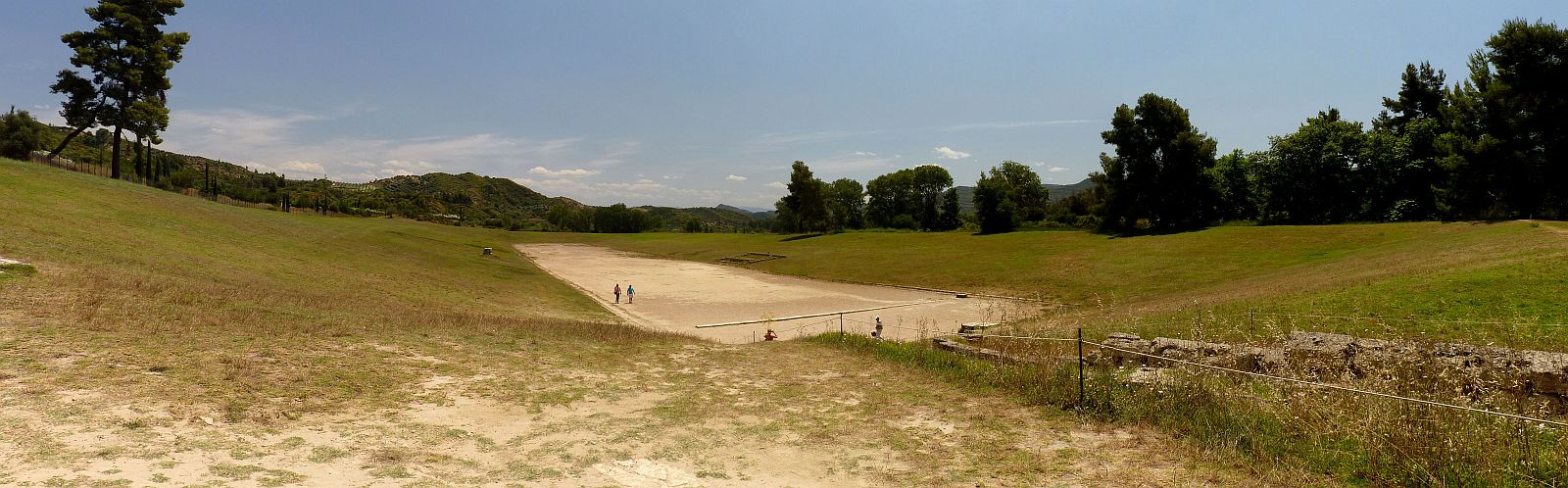
The vaulted stadium passage, traditionally called the Crypt, creates one of Olympia’s most memorable changes of scene. The enclosed approach opens into the long competition ground, with earth banks defining its sides. First take in the whole length; only then look for details around the track and its ends.
Avoid rushing straight to a photograph and back. Looking toward the entrance from farther along the permitted route makes the relationship between sanctuary and stadium easier to understand. Follow the site’s instructions about where visitors may walk; an ancient competition ground is also a protected monument.
Plan a visit with time to stop and look
Give the archaeological site a substantial part of your day and leave a separate block for the museum. Check Hellenic Heritage for current admission and opening information before setting your route; these can change by season. Bring water, sun protection and shoes suitable for uneven ground.
Streetmodo’s Ancient Olympia Audio Tour follows 16 narrated stops over approximately 1.6 kilometres, including the return toward the entrance. English audio, photographs and an offline map are bundled; download other language packs while connected. The welcome, Gymnasium and Prytaneion stops are free, with the remaining tour available through an in-app purchase. Site admission is separate.