 Streetmodo
Best of Mare Island: Shipyard History, Chapel and Waterfront
Updated · Streetmodo
Mare Island is most rewarding when you alternate its enormous industrial spaces with smaller places where people lived, worshipped and remembered the dead. The former naval shipyard in Vallejo began in 1854 and closed in 1996, leaving a layered landscape that continues to change. Streetmodo’s Mare Island Audio Tour connects nine main stops with optional preserve detours. Use this selection to build a visit around the areas and buildings currently open.
Explore with the Mare Island Audio Tour on the App Store.
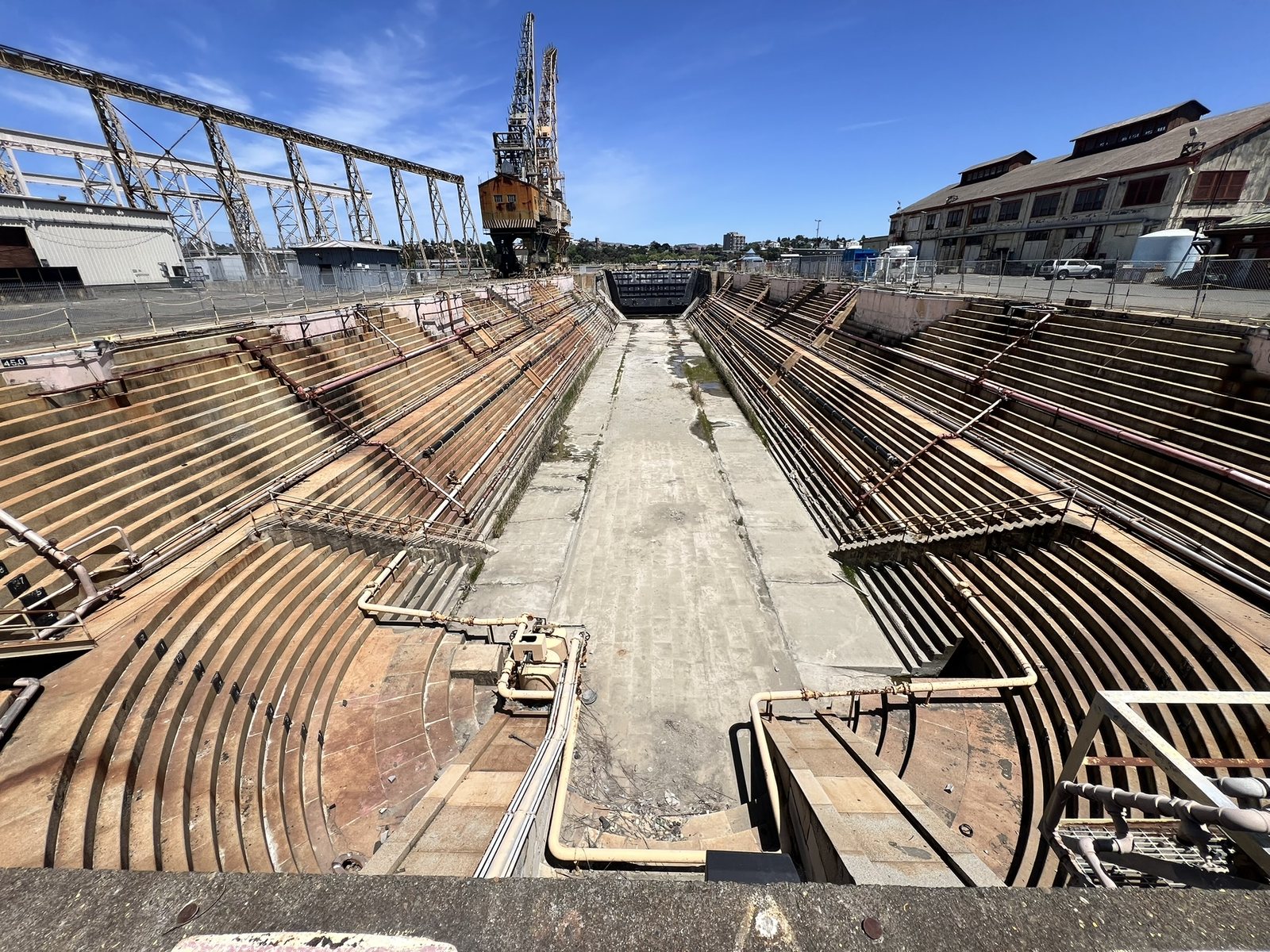
1. Read the scale of Dry Dock 1
Dry Dock 1 is a strong starting point for understanding shipyard work. Its stepped granite sides form an immense basin built to receive vessels, then expose their hulls for work after water was removed. The Historic American Buildings Survey records a construction effort lasting almost twenty years, completed in 1891. From a permitted public viewpoint, follow the stairs and terraces with your eyes. They make the depth easier to judge than a distant photograph does. Stay outside restricted work areas and away from unprotected edges.
Connect the dry dock with the submarine memorial
2. Stand beside the USS Mariano G. Vallejo sail
The preserved submarine sail creates a different encounter with naval engineering. It is a portion of the vessel, not a complete submarine waiting to be boarded. Seeing that distinction helps you imagine how much of the original hull is absent. Compare its smooth, compact form with the open stone geometry of the dry dock. Mare Island’s long working life spans different technologies, and these two stops make that change visible without requiring a detailed knowledge of naval construction before you arrive.
3. Look for the shipyard community around Alden Park
The park and nearby historic buildings interrupt the industrial landscape with trees and more domestic proportions. Take a short walk and compare this setting with the dock: a naval base also needed places for ceremony, administration and daily life. Let the contrast guide your photographs. A doorway, a line of trees or a veranda can say as much about the island as a crane or workshop. Keep to public routes and respect occupied buildings; an attractive historic façade does not establish that an interior is open to visitors.
4. Visit St. Peter’s Chapel when it is open
St. Peter’s Chapel is a natural centerpiece for visitors interested in art and personal history. The interior’s stained glass changes the pace of a shipyard visit, inviting you to look at color, commemorative details and the people remembered there. Check the Mare Island Historic Park Foundation’s current Open Chapel calendar or arrange an appropriate tour. Do not build the day around an assumed walk-in opening. Even when you cannot enter, the exterior belongs in a route that also considers the nearby officers’ residences and park.

Explore St. Peter’s Chapel and Officers’ Row
5. Compare the houses along Officers’ Row
Officers’ Row brings rank, family life and institutional planning into the story. Rather than rushing along the buildings as a backdrop, compare their scale, setbacks and architectural details from the public route. Consider how different living here would have felt from working beside the docks. The Admiral’s Mansion is part of the foundation’s historic property program, but access depends on current arrangements. A reservation-based visit and a self-guided exterior walk are different experiences; choose the one available for your date.
6. Walk thoughtfully through the naval cemetery
The naval cemetery offers a quieter way to understand the island’s community. Read individual names and dates before stepping back to take in the rows. A military workplace also held family histories, illness, loss and lives that cannot be reduced to a shipbuilding timeline. Keep the pace respectful and avoid treating graves as props for posed photographs. Check the Department of Veterans Affairs’ current visitor information before arriving, particularly if this is the main reason for your trip.
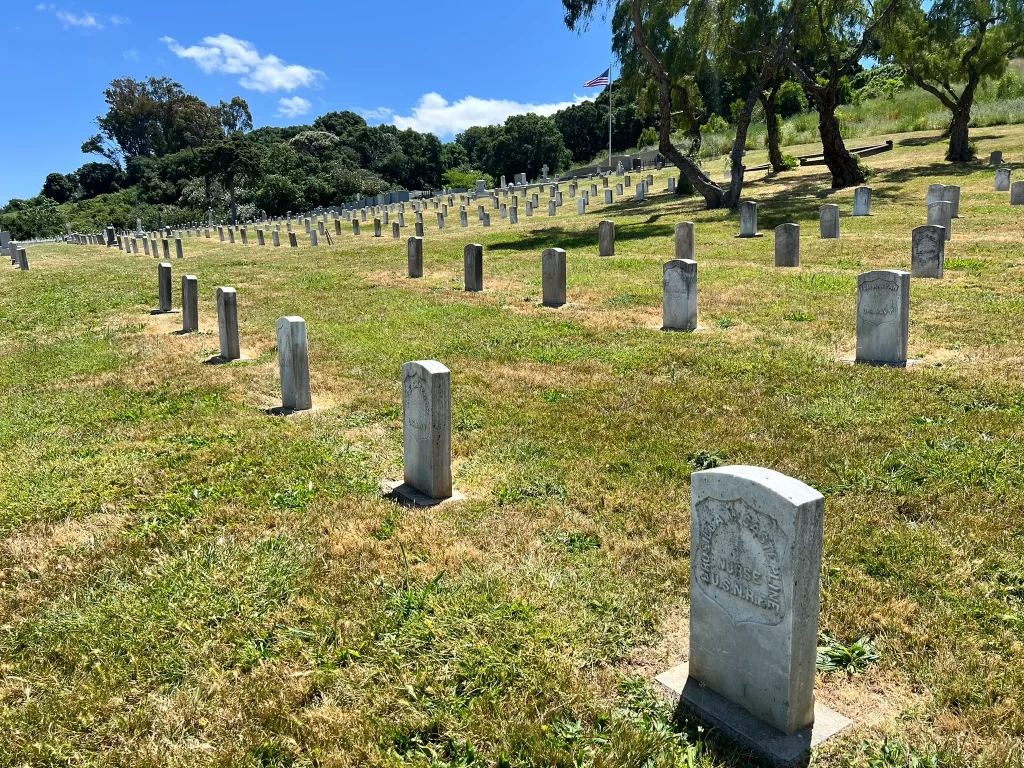
Understand the people remembered at the naval cemetery
7. Leave room for the waterfront and creative spaces
The coal sheds and waterfront add another layer: the reuse of a former industrial landscape. Look for current studio or event information if you want to meet artists or go inside, rather than assuming that workshops keep regular visitor hours. Even an exterior walk can show how old industrial forms accommodate new uses. If you are considering the preserve or Spirit Ship detour from the app, check current access separately and budget additional time; those stops should not be treated as automatic extensions of every shipyard walk.
Plan around current access
Start with a few priorities: dry dock and submarine history, chapel and residences, or a longer route including the cemetery. Check the foundation’s tour calendar and the current rules for each area. Its former museum closed in 2020, so old travel articles promising a routine museum visit are not a dependable plan. Wear shoes for uneven outdoor surfaces, carry water and download the audio before starting. Leave enough time between stops to notice the landscape; Mare Island works best when the connections between places become part of the visit.