 Streetmodo
Inside Akrotiri on Santorini, from buried houses to painted rooms
Before you walk into Akrotiri, imagine standing on an upper floor and looking across a narrow street into the building opposite. The excavated settlement on southern Santorini preserves enough of its multi-story buildings to make that a reasonable way to picture life here before the eruption.
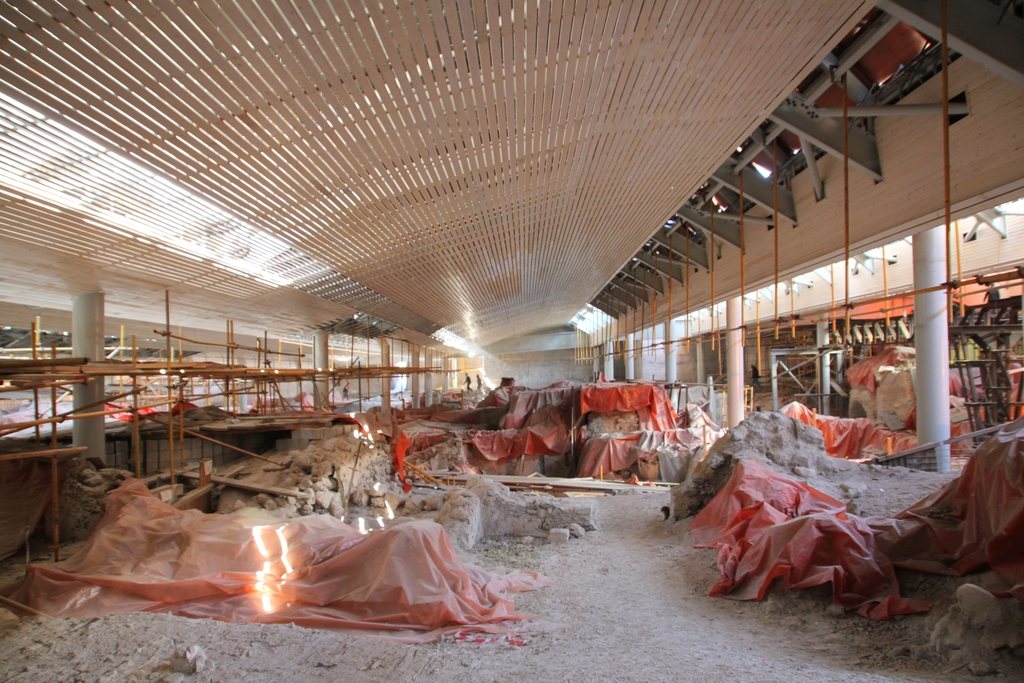
What can you see beneath the roof at Akrotiri?
The shelter covers an excavated portion of a Bronze Age town buried by volcanic material. Walls, staircases and the shapes of rooms survive. Pause where you can see two buildings at once and follow the gap between them to pick out a street. The site extends beyond the area exposed beneath the roof, so the outline of the shelter tells you little about the original limits of the town.
How can I keep track of the houses on the visitor route?
Use the site plan and the building names on the signs. Xeste 4 and Xeste 3 are distinct structures. Farther along, the West House and the House of the Ladies give you two more names to look for. Notice which features you can identify from the walkway, such as the line of a wall or a change in floor level, before moving to the next building.
Where can I see the wall paintings from those buildings?
Visit the Museum of Prehistoric Thera in Fira. Its displays bring together paintings from two rooms in the private West House and part of the decoration of Xeste 3, a public building. Look at how the pictures belonged together across a room. Then look for smaller finds such as bronze vessels and clay tablets, which preserve evidence of activities that left few traces in the bare rooms.