 Streetmodo
The throne and the painted griffins at Knossos
It is hard to look at the seat in the west wing of Knossos without picturing a person in it. Begin a step earlier. Look at the available places to sit, the sunken space across the room and the figures painted on the walls. Each preserves a different kind of evidence.
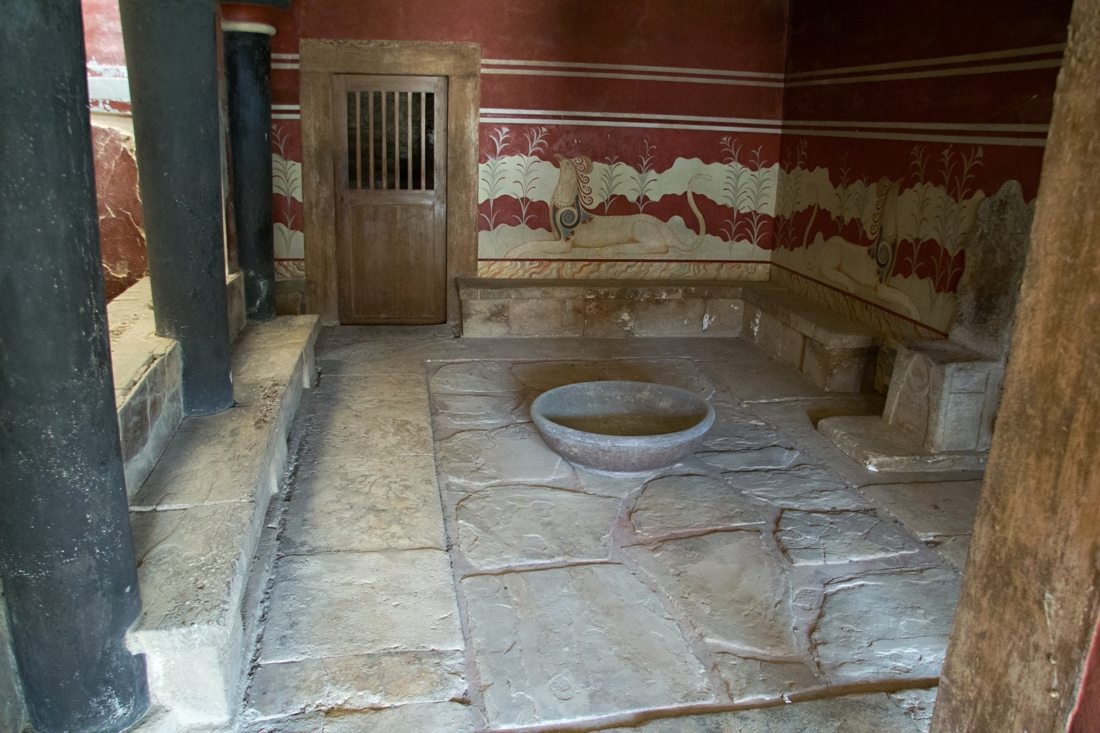
What makes this room look like a place for an audience?
One shaped gypsum seat stands apart from the benches along the walls. The difference gives the room a visual focus even when it is empty. A recessed area usually called the lustral basin is another feature of the complex. The arrangement raises the question of who faced whom here, but a plan alone cannot tell us who occupied the seat.
How much of the griffin painting was found on the walls?
Excavators recovered painted fragments in different parts of the room. The scene now shown around the seat brings those pieces together in a reconstruction. Later researchers compared the surviving plaster with old photographs and excavation notes, revising details of the griffins and surrounding plants. Try following a single painted detail, such as the neck of an animal, when looking between a photograph and the reconstructed scene.
Does the name prove a king sat here?
The name reflects Arthur Evans’s reading of the room. He proposed a ceremonial role for a ruler. Archaeologists have since explored other possibilities, including religious performances and changes in how the space was used over time. It is possible to recognize a setting for a person of consequence while leaving the identity of that person open.