 Streetmodo
How to Tell the Theatre of Dionysus and the Odeon Apart
There are two places on the south slope of the Acropolis where stone seats curve around a performance space. If you have seen photographs of an Athens concert with a high stone wall behind the stage, you might expect that view at the Theatre of Dionysus. Look for it farther west, at the Odeon of Herodes Atticus.
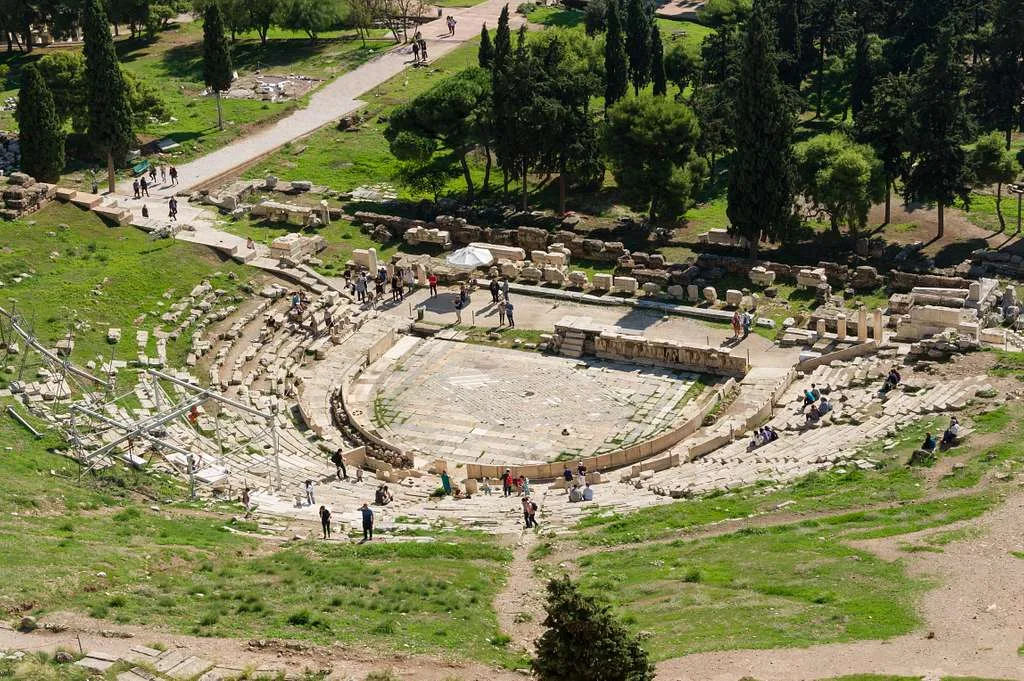
What is the difference between the Theatre of Dionysus and the Odeon of Herodes Atticus?
The Theatre of Dionysus grew out of festivals held at the sanctuary of Dionysus. This was where Athenian playwrights competed and audiences saw the work of Sophocles and Aristophanes. The Odeon dates to Roman Athens, centuries later. On a walk from east to west, the broad, open sweep of the Theatre of Dionysus comes first. The tall, arched wall behind the Odeon’s stage makes the second building easy to recognize.
What should I look for in the front row at the Theatre of Dionysus?
From the visitor path, compare the curved stone benches with the individual chairs down by the orchestra, the open performance area. The front row held seats of honor. A marble throne in its middle was reserved for the priest of Dionysus. Once you find the throne, look back up the slope at the rows behind it. The difference between one person’s chair and a bench shared by a crowd says quite a bit about who sat where.
Which theatre did the ancient Greek playwrights use?
The Theatre of Dionysus hosted the dramatic contests of the City Dionysia. The audience came for a religious festival as well as a performance. The theatre changed over time, so the stone seating you see today belongs to a later stage of its life than the first performances of those plays. The Acropolis Museum’s south-slope collection gives you another place to trace its connection with the sanctuary below.