 Streetmodo
What Do the Inscriptions on the Gate of Athena Archegetis Say?
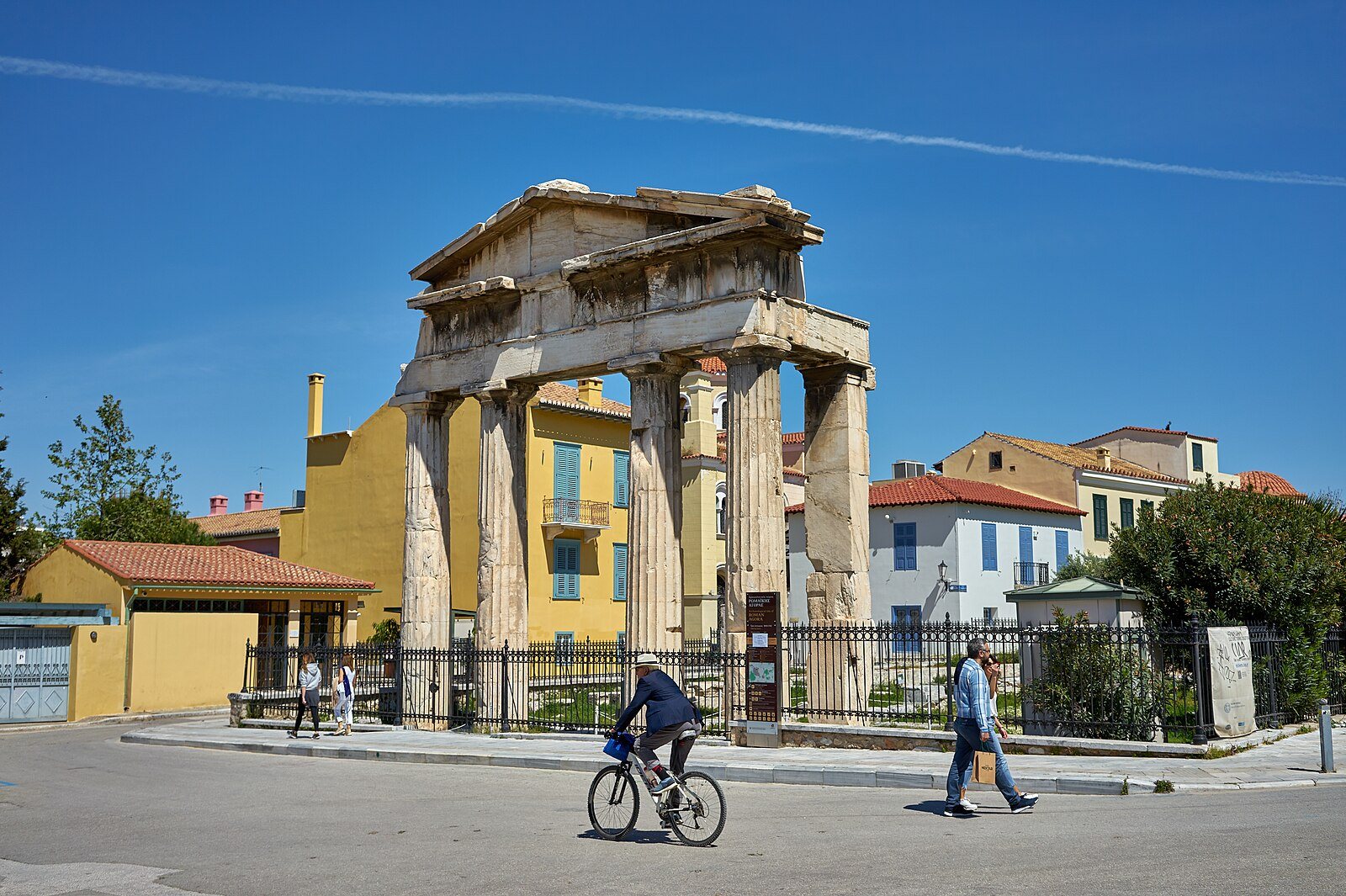
The western gateway of the Roman Agora carries messages written for two different audiences. One announced who paid for the building and to whom it was dedicated. The other set out rules for dealing in olive oil. Their positions on the gate give you a clue to how each was meant to be read.
Who paid for the Roman Agora’s western gate?
Look up to the horizontal stone beam above the columns. The dedication records that the people of Athens used gifts from Julius Caesar and Augustus and dedicated the work to Athena Archegetis. It also names Eukles of Marathon, who continued his father’s work on the project. The inscription gives the imperial donors and the Athenian officials a place in the same account.
Where was Hadrian’s olive oil law inscribed?
The later text was cut into an inner doorpost on the eastern side of the gateway. That puts it at the threshold between the street and the market. Use the linked translation to follow its provisions even if the Greek letters are difficult to distinguish. The position of the text makes sense for a law addressed to people who grew, bought or shipped oil.
What did an oil producer have to report?
Most producers owed a third of their harvest for public purchase, with a smaller share specified for certain estates. Sales for export involved separate paperwork. A seller had to declare the quantity, the buyer and even where the ship was anchored. A few lines of stone take you all the way from an olive grove to a cargo waiting to leave port.