 Streetmodo
How to Read the Carved Facades at Las Monjas and La Iglesia
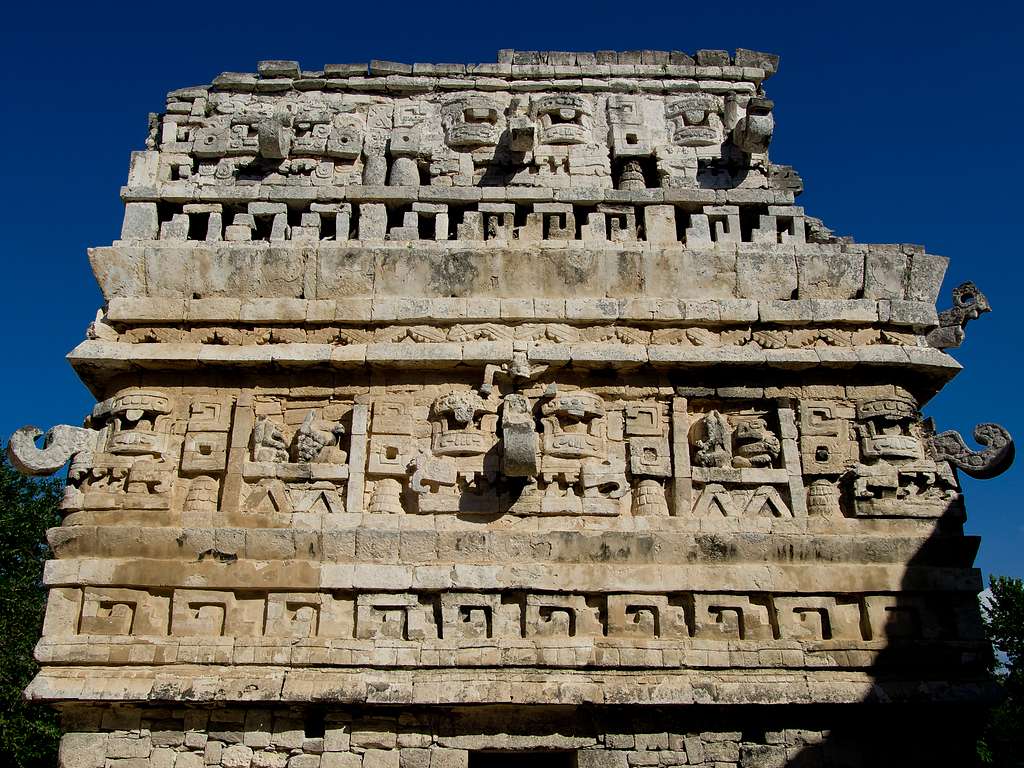
South of Chichén Itzá’s main plaza, a small building can easily hold your attention longer than a pyramid. At La Iglesia, stone faces and geometric bands crowd the upper facade. Walk over from El Caracol and spend a few minutes looking at this one group before picking another checkpoint.
Why do these Maya ruins have names like Nunnery and Church?
Las Monjas means “the nuns.” The many rooms of the complex reminded Spanish observers of a convent, and their nickname stuck. La Iglesia, or “the church,” is the small neighboring building. The English names on maps can suggest a very different history from the one the carvings tell. Find the complex under Grupo de las Monjas and use the two names as landmarks.
What should I look for on La Iglesia?
Start with the outline of the building, then look up at the ornament across the facade. Follow a band of geometric carving to see where a projecting face interrupts the pattern. INAH identifies La Iglesia as an example of Puuc architecture. If you take a photograph, leave one corner in the frame. It gives depth to carved details that flatten into a pattern when seen straight on.
How is the East Annex different from La Iglesia?
The annex belongs to the larger Las Monjas building. Its front carries many masks associated with the rain god Chaac, and an inscription marks the doorway. Find that opening first, then work outward to the repeated faces. Compare that photograph with your view of La Iglesia. The doorway and corner give you two reliable ways to sort the pictures when the buildings no longer sit side by side in front of you.