 Streetmodo
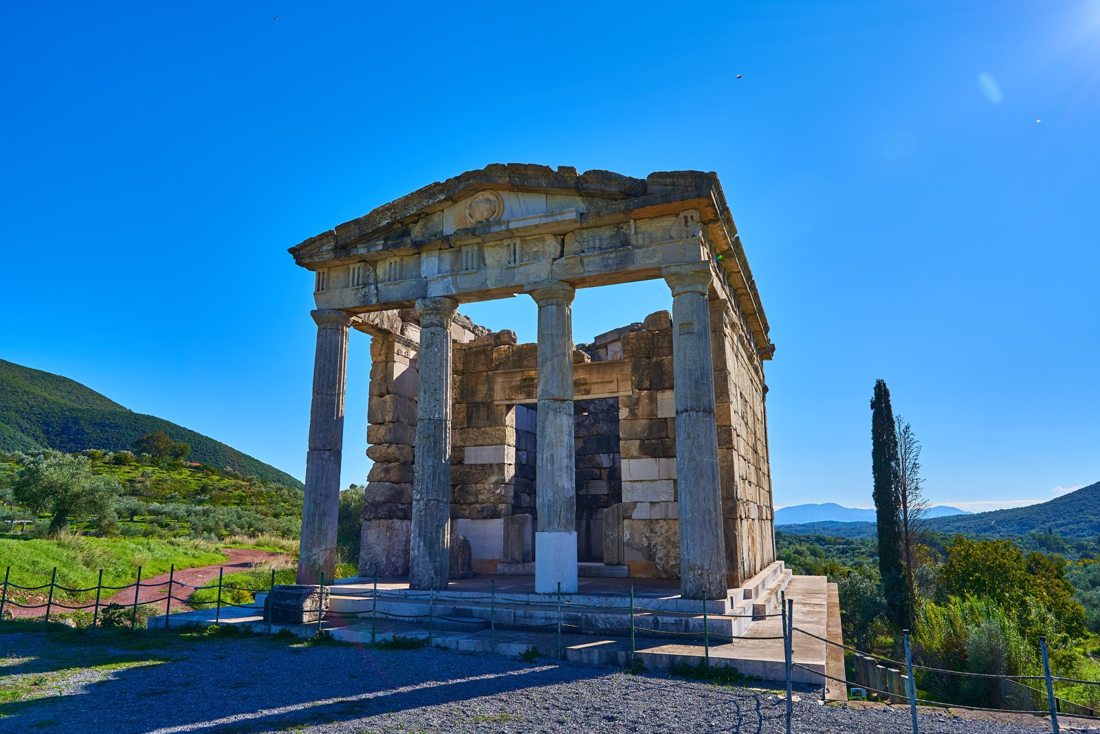
What Is the Temple-Shaped Building at the End of Messene’s Stadium?
Stand where you can see the long axis of the stadium at Ancient Messene. At one end the seats curve around the track. At the other stands a small building with a triangular front. Between them, rows of columns mark the spaces where young Messenians trained and studied.
Which part of Ancient Messene was the stadium?
The long open track and the stone seating at its northern end belong to the stadium. Look for the stairways that divide the curved banks into wedges for spectators. Then shift your gaze beyond the seats to the columns surrounding the track. Those rows marked covered walkways used by the gymnasium. Races and training took place within one connected complex.
What happened in the gymnasium beside the track?
Young men followed a course of physical and civic education here. Look along the western colonnade toward the adjoining palaestra, the exercise court. A bath and rooms for teaching and lodging belonged to this part of the complex. The excavators also found monuments honoring distinguished people. The setting brought together athletic practice, education and the memory of citizens whom the community chose to honor.
Who was buried in the building at the south end?
The Saithid family buried distinguished relatives in this mausoleum during the Roman period. Its four front columns, triangular pediment and high base gave the tomb the appearance of a Doric temple. From the track, look at how it closes the view to the south. Its base projects from the city wall. A family burial place stood in full view of the crowds who came to watch athletics, and its occupants received honors as heroes.