 Streetmodo
Where Did the Water for Messene’s Arsinoe Fountain Come From?
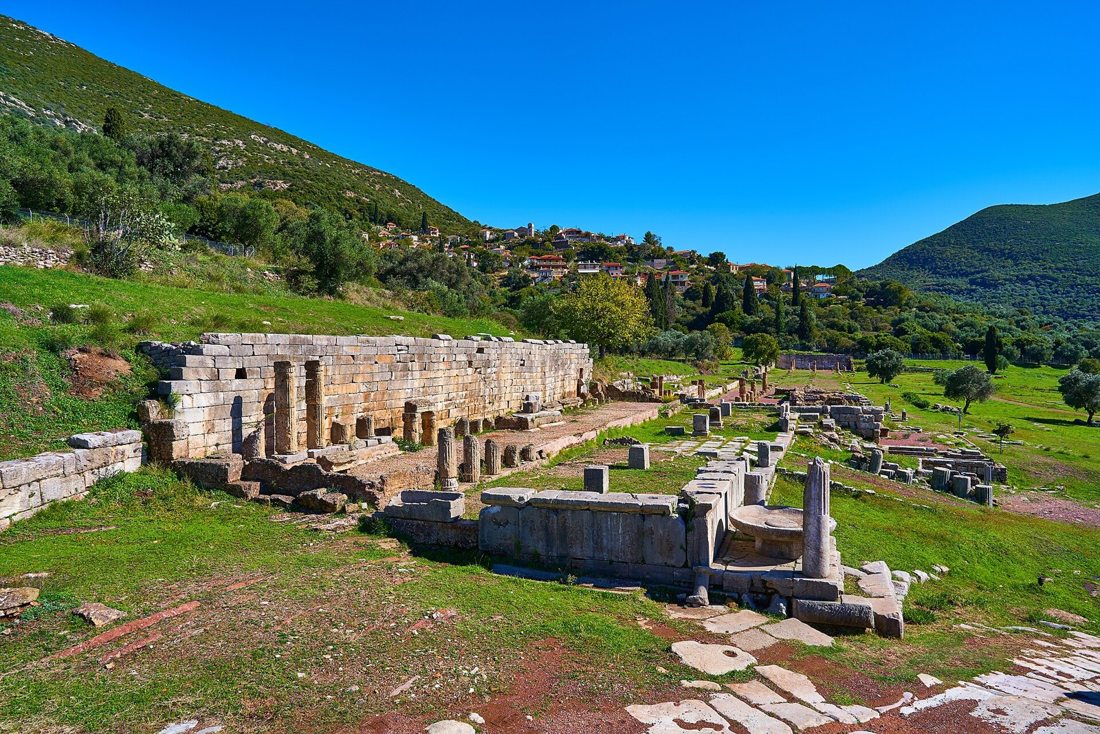
Between the theatre and market at Ancient Messene, a long, low building once received water from a spring in the village above. Begin at the upper part of the fountain on the site plan. From there the changes in level explain more about the building than its ruined façade alone.
Which spring supplied the Arsinoe Fountain?
The water came from the Klepsydra spring in present-day Mavrommati. A conduit brought it into a long upper reservoir in front of a high retaining wall. Look along that wall for the relationship between the hillside and the basin. The excavators identify this as the fountain described by Pausanias partly because it stands beside the large northern colonnade of the market.
Why does the fountain have several levels?
Below the long reservoir, two more basins flanked a paved open space. Together they created a broad, symmetrical front toward the city. Find the midpoint of the upper basin. A curved pedestal there supported a group of bronze statues. Water supply and public display shared a prominent position beside the place where Messenians came to trade.
What does a watermill have to do with the fountain?
After the monumental fountain had gone through several rebuildings, people continued using its eastern section. A mill was constructed on the lower level with pieces reused from earlier buildings. Follow the fall of the ground from the upper reservoir to that later structure. The stonework and the available water helped give an old civic monument a second working life.