 Streetmodo
How Did the Stage Move at the Theatre of Ancient Messene?
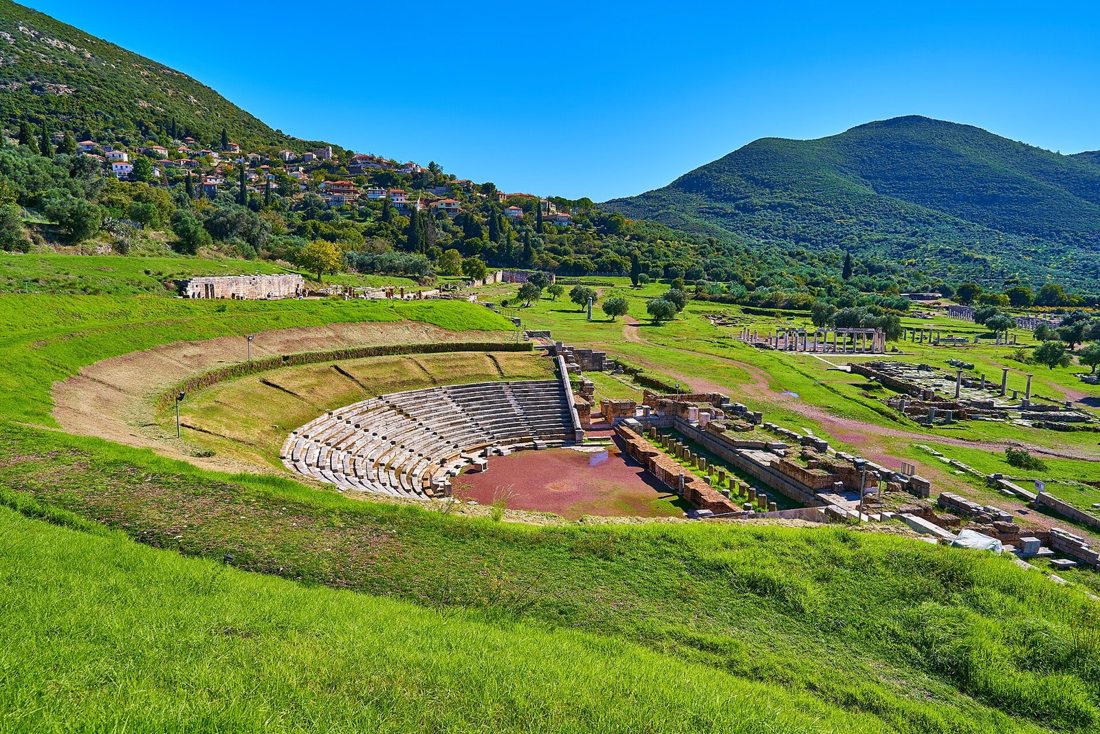
At the theatre of Ancient Messene, the rows of seats are easier to recognize than the machinery used for a performance. Turn toward the stage area. A long storage room and lines of stone preserve the evidence for scenery that could be wheeled into position.
What was the skenotheke beside the stage?
It was a storage building for a movable scenic structure. Surveyors documented grooves in lines of stone connecting the store with the performance area. Their reconstruction places parts of the wooden stage on wheeled supports that ran on those tracks. Trace the direction of the lines on the plan. They show how crews could bring scenery out from storage across the working end of the theatre.
Where did the audience sit in relation to the stage?
The curved auditorium faced the performance area and was divided into eleven sections. Two stairways served the upper seats and a ramp led into the lower part. Six seats of honor once stood around the orchestra, the open space at the foot of the auditorium. Compare that close view with the sightline from the upper seating on the theatre plan.
Did the Romans still use the wheeled stage?
In the second century CE a substantial three-story stone stage building replaced the earlier arrangement. The theatre had already changed before then, passing from an early wooden stage to its movable scenery. Reading the parallel tracks and the stone building as two chapters of the theatre’s history explains why both kinds of construction occupy the same scene.