 Streetmodo
Best of the Roman Agora and Hadrian’s Library: Ancient Athens Beyond the Acropolis
Updated · Streetmodo
The Roman Agora and Hadrian’s Library fit naturally into the lanes between Plaka and Monastiraki, but they deserve more than a glance through the railings. Together they show a later chapter of ancient Athens: monumental commerce, ingenious timekeeping and an imperial setting for books and learning. These six highlights follow the two locations covered by Streetmodo’s Roman Agora of Athens Tour, while keeping their different buildings and purposes clear.
Explore with the Roman Agora of Athens Tour on the App Store.
The Gate of Athena Archegetis: enter with the dedication in mind
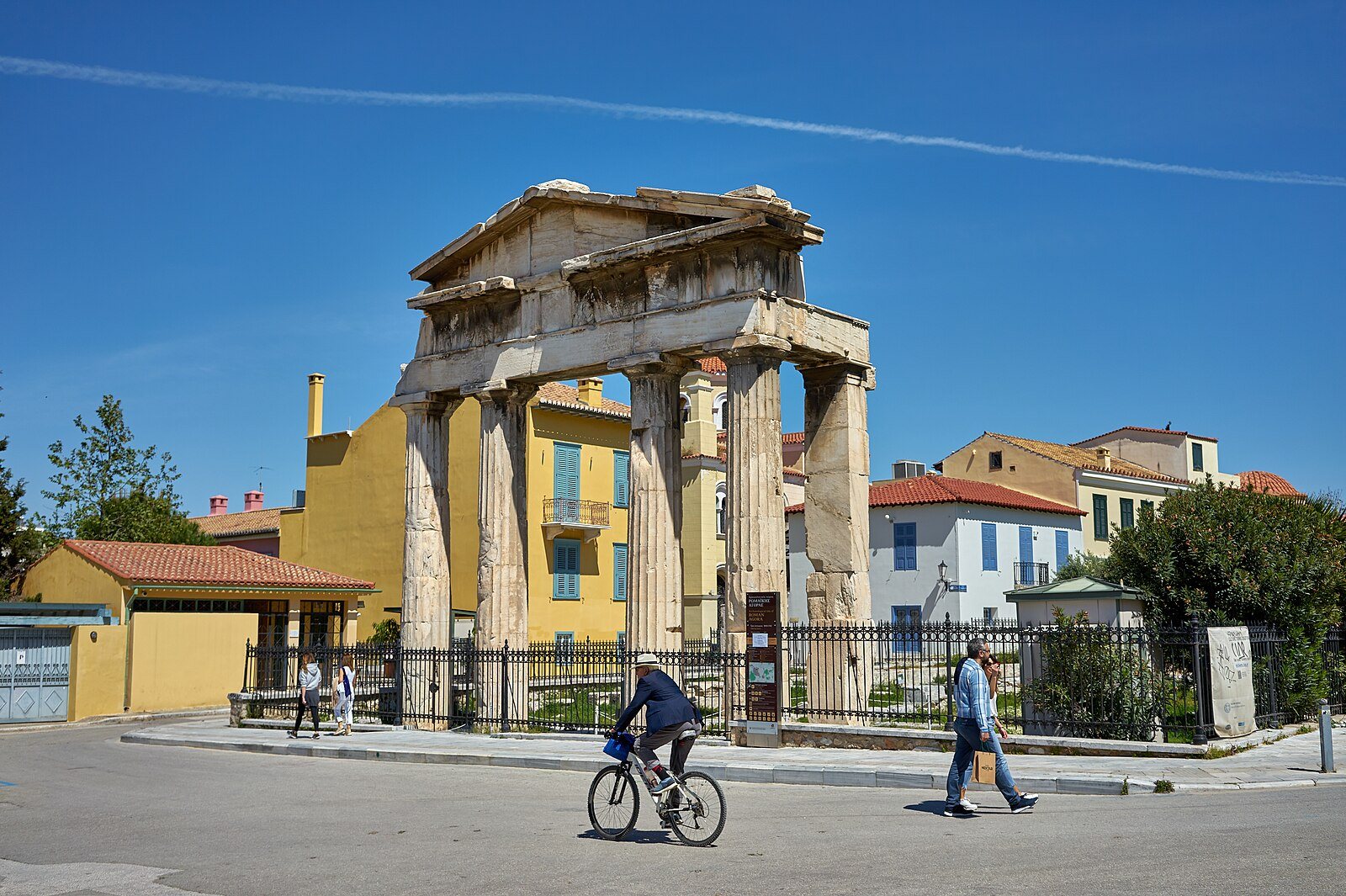
The western gate provides the Roman Agora’s strongest first impression. Its four Doric columns frame a formal entrance to the market courtyard. Funding associated with Julius Caesar and Augustus places this part of Athens in a Roman political setting, even as the dedication invokes Athena.
Stand back far enough to see the whole gateway before approaching the details. A photograph taken at an angle can show both the column depth and the space beyond. The inscriptions repay explanation, but avoid expecting every letter to be legible from a normal visitor position.
Read the story of the gate’s inscriptions
The market court: follow the edges before the individual stones
Inside, use the open rectangle of the courtyard to orient yourself. The surrounding stoas once framed the market, creating a more enclosed setting than today’s ruins suggest. Trace the edges visually, then locate the opposite, eastern entrance. Its Ionic architectural treatment offers a contrast with the Doric western gate.
The useful exercise here is reconstruction by outline. Imagine where covered circulation stopped and the open central area began. Looking across the court from two different corners makes the plan clearer than trying to identify every isolated column fragment as you pass.
The Tower of the Winds: read the building from top to bottom
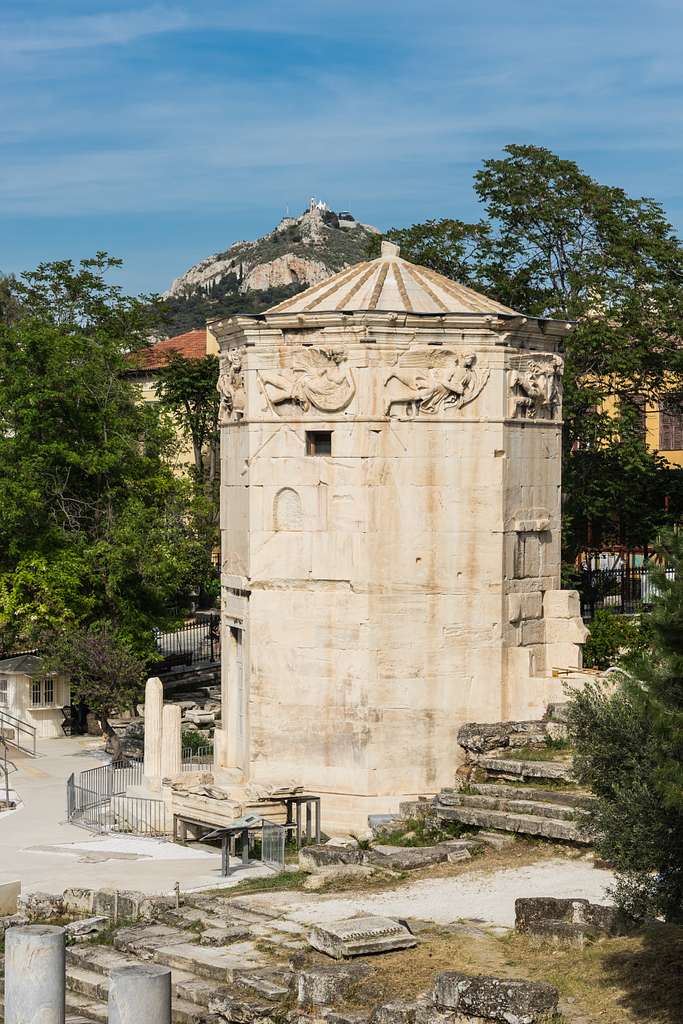
The octagonal Tower of the Winds is the most distinctive structure beside the market. Start with the relief figures high on its eight sides: they personify the winds. Then look for the timekeeping elements described on the site information, including the exterior sundials and the water-clock system once inside. A bronze wind vane originally crowned the roof.
Each face gives a slightly different view, so compare several from the permitted route. Even if interior access is unavailable, the outside offers plenty to study. The building combined useful observations with sculpture, rather than separating decoration from function.
Understand the Tower of the Winds
The smaller remains: the market’s working infrastructure
The route’s administrative building and public-latrine stops bring everyday activity back into the visit. These are less visually complete than the gate or tower, so begin with the site plan and labels rather than guessing a function from the stones alone. The app’s reference photographs can help you match the correct remains to the narrative.
This is the point to think about what a busy market needed: supervision, circulation and basic services. A compact archaeological site can communicate a surprising amount when you give its less photogenic corners the same attention as its headline monument.
Hadrian’s Library: a second entrance and a different ambition
Walk onward to Hadrian’s Library, close to Monastiraki. Treat it as a separate archaeological visit rather than another room of the market. The surviving western façade and Corinthian entrance introduce a complex inaugurated around AD 132, during Hadrian’s extensive building activity in Athens.
Pause before entering to compare its architectural language with the gate you have just left. The library’s surviving monumental frontage makes a statement to the surrounding city, but the overall plan is what explains its purpose. Follow the official visitor route into the site to see how the entrance relates to the space behind it.
The library court and eastern rooms: put the books back on the plan
Hadrian’s Library was more than a shelf-lined room. Its large courtyard, colonnades and water features formed a setting for reading and learning, while the eastern side held the book repository, reading rooms and lecture spaces. Look across the site to place those rooms relative to the entrance.
The surviving remains also include later alterations, so consult the plan before assuming everything belongs to Hadrian’s original project. Once you have separated the phases, the empty spaces become easier to interpret. End with a view across the court, keeping the eastern rooms in mind rather than concentrating only on the famous exterior columns.
Find where the books were kept
Plan a compact walk with two separate site visits
This pairing works well as a focused part of an Athens day, with time afterward in Plaka or Monastiraki. Check the current opening and admission arrangements for each site; do not assume one ticket or one closing time covers both. Allow extra time if you want to read inscriptions or compare building plans.
Prepare Roman Agora of Athens Tour before setting out. Its offline audio, photographs and location cues connect the Gate of Athena Archegetis, market remains, Tower of the Winds and Hadrian’s Library. Pause clear of entrances while listening, and use the route available on the day. The app does not replace admission tickets.