 Streetmodo
Best of Ancient Messene: Theatre, Sanctuaries and Stadium
Updated · Streetmodo
Ancient Messene is a place to appreciate the shape of a whole city. A theatre, water supply, market, religious center and athletic complex occupy a broad landscape below Mount Ithome. The stadium delivers the most immediately memorable view, but the approach through other public spaces makes it far more meaningful. Give yourself enough time to follow the connections and to walk back from the lower areas without rushing.
Explore with the Ancient Messene Audio Tour on the App Store.
1. Begin with the theatre
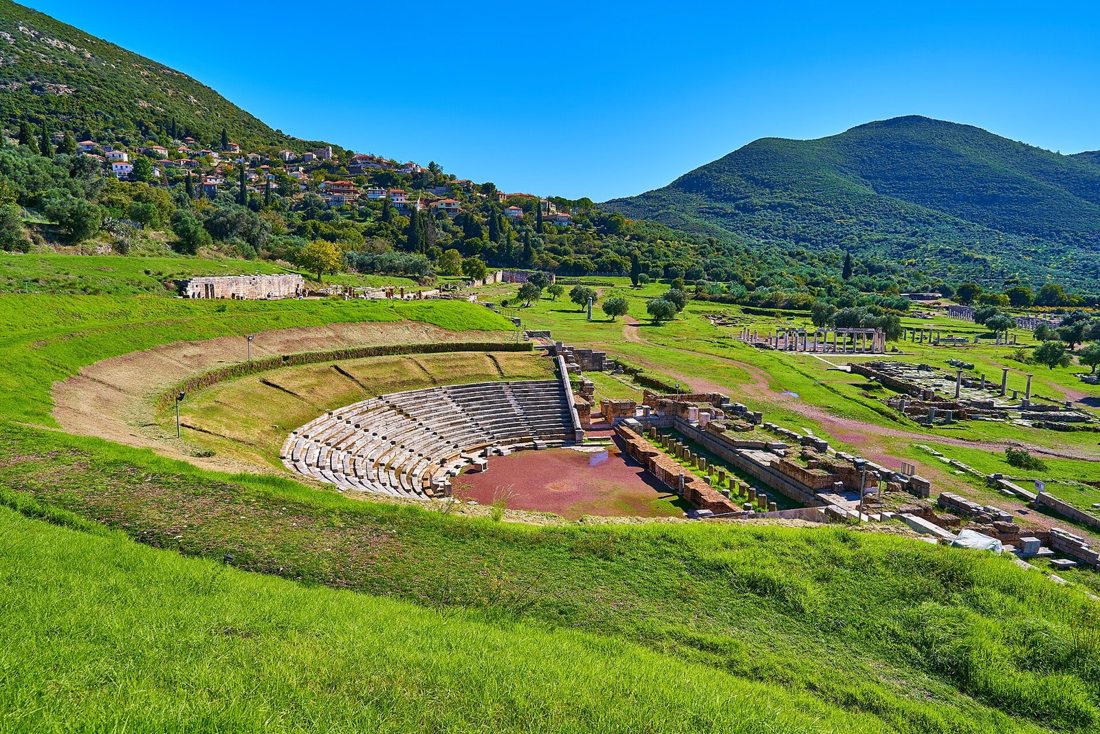
The theatre is an effective introduction because its seating and performance space are easy to recognize. Look across the curved auditorium, then turn your attention to the stage area. The building served public gatherings as well as performances and changed over its long life.
One unusual detail is the provision for a movable stage structure. You do not need to reconstruct the entire mechanism to appreciate that this was a working venue, altered to meet different expectations rather than preserved unchanged from a single moment.
Learn about Messene’s theatre and stage
2. Follow the water at Arsinoe Fountain
Arsinoe Fountain makes an everyday necessity monumental. Its long arrangement of reservoirs and basins drew water from the Klepsydra spring at Mavrommati. Instead of seeing it as one broken facade, try tracing the different levels and imagining water passing through the structure.
Stand back far enough to register its length. The fountain helps explain why a city needed more than impressive temples: water had to be collected, distributed and maintained. Its changes over time offer another reminder that Messene was continually adapted by the people living here.
Look more closely at Arsinoe Fountain
3. Find the civic scale of the Agora
The Agora asks you to read open space as carefully as stonework. Market activities and civic buildings belonged to this part of the city, with stoas creating defined edges. Look along those lines before concentrating on individual fragments.
Try comparing the market with the theatre: one gathers people around a performance or assembly, the other supports movement and repeated daily encounters. The contrast gives a practical way to understand Messene’s urban life without needing to identify every surviving foundation.
4. Spend time in the Asklepieion
The Asklepieion was a major religious and civic complex, with a temple and altar within a court surrounded by porticoes and rooms. It should not be reduced to a simple idea of an ancient hospital. Public identity and the display of statues were central to its character.
Begin by finding the courtyard’s outline, then look at how the surrounding rooms address it. The abundance of statue bases makes a useful exercise: picture people and dedications occupying spaces that now seem unusually bare, while keeping reconstruction separate from what actually survives.
5. Read the gymnasium and palaestra together
Near the stadium, the gymnasium and palaestra broaden the story beyond an athletic contest. Training, education and organized social life belonged to this environment. Rows of columns make the relationship between sheltered space and open exercise areas especially legible.
Walk at a pace that lets you compare the buildings rather than photographing each colonnade separately. Consider where someone might wait in shade, move into a courtyard or approach the stadium. Following those transitions is a good way to turn an imposing ruin into a place people once used.
6. Take in the stadium from both ends
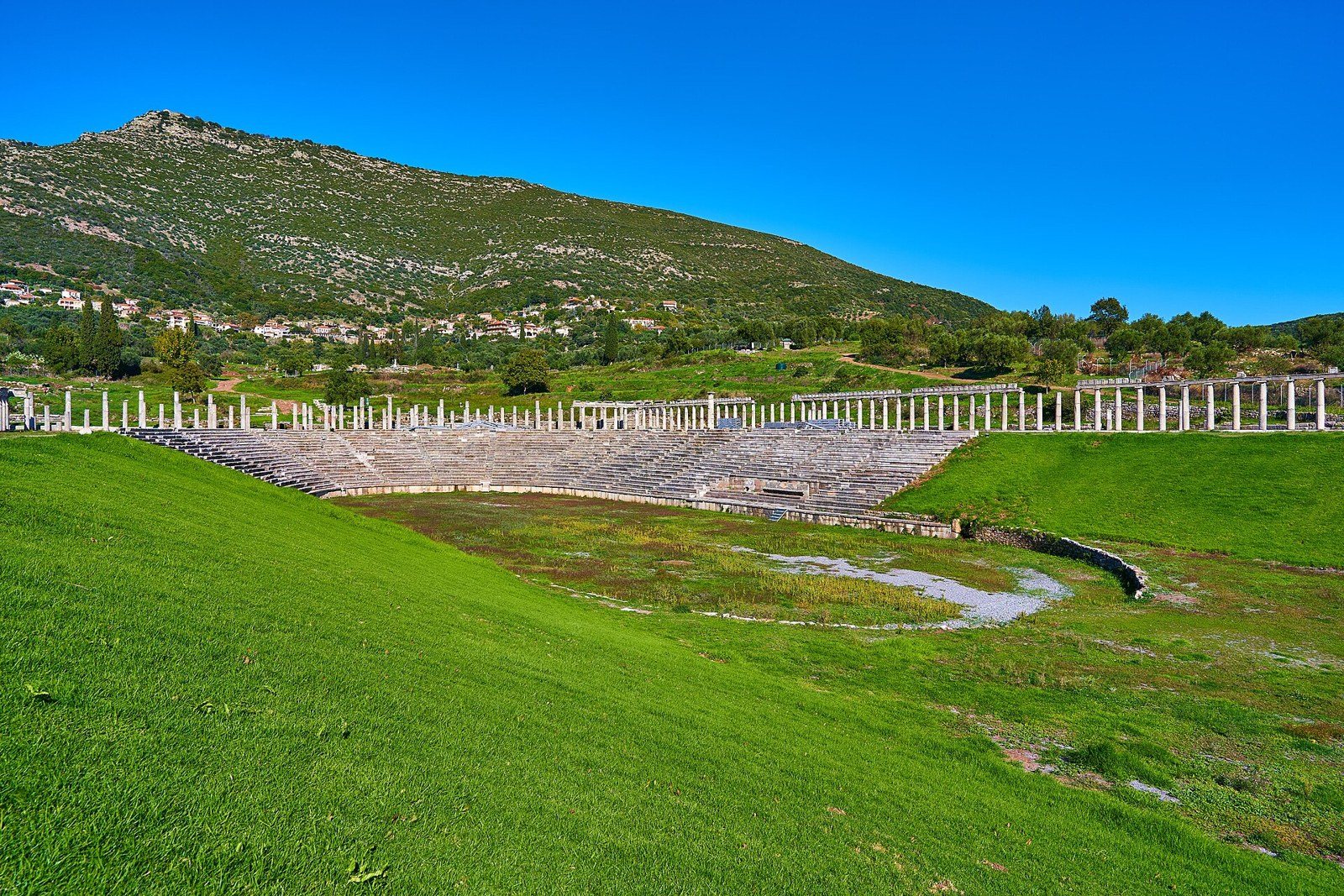
The stadium is the visual climax for many visitors: seating curves around one end, while the long track opens toward the far monument. Start with a broad view, then pay attention to the relationship between seating, running space and neighboring porticoes.
Leave enough energy to appreciate the return perspective. Looking back along the track changes the balance of architecture and landscape. The scale becomes clearer when you have walked beside it, and the gymnasium stops help explain why the stadium was part of a larger institution.
7. Identify the Saithid family mausoleum
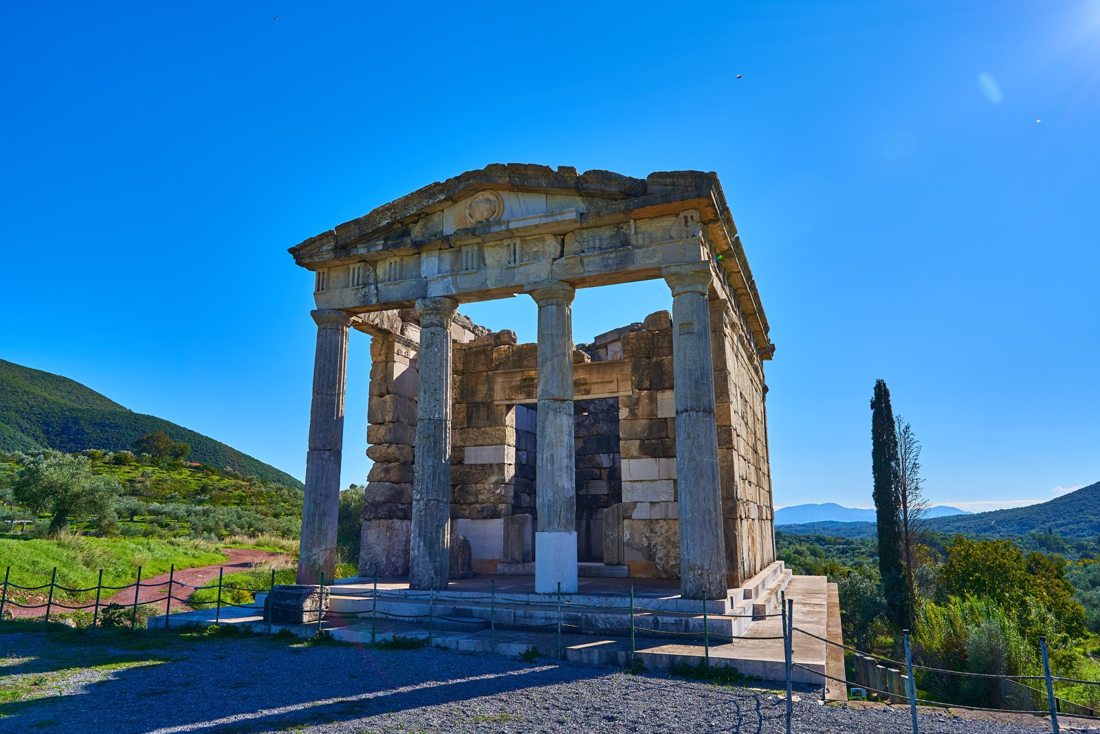
The temple-shaped building at the stadium’s far end is a funerary monument associated with the Saithid family. Its prominent position and columned facade distinguish it from the seating and training structures around it.
First take in the building from along the stadium, then study its proportions from the permitted approach. Its resemblance to a temple can be misleading until you know its function. This is a particularly useful audio-guide stop: a small piece of explanation changes the meaning of one of the site’s most photographed views.
Understand the monument at the stadium
How to plan your Ancient Messene visit
Plan for an outdoor archaeological walk with uneven surfaces and exposed stretches. Bring water, sun protection and comfortable walking shoes, and check the official site information for current openings and entry arrangements. Allow for the return route when deciding how far to explore.
Ancient Messene Audio Tour follows eighteen stops, with a suggested circuit of about three kilometers including the return. Download its narration and photos in advance. The satellite map can help with orientation, while manual stop selection lets you listen wherever the permitted route takes you.
Sources and visitor information
- Ephorate of Antiquities of Messenia: theatre
- Ephorate of Antiquities of Messenia: Agora
- Society of Messenian Archaeological Studies: Arsinoe Fountain
- Society of Messenian Archaeological Studies: Asklepieion
- Society of Messenian Archaeological Studies: gymnasium and stadium
- Society of Messenian Archaeological Studies: Saithid mausoleum